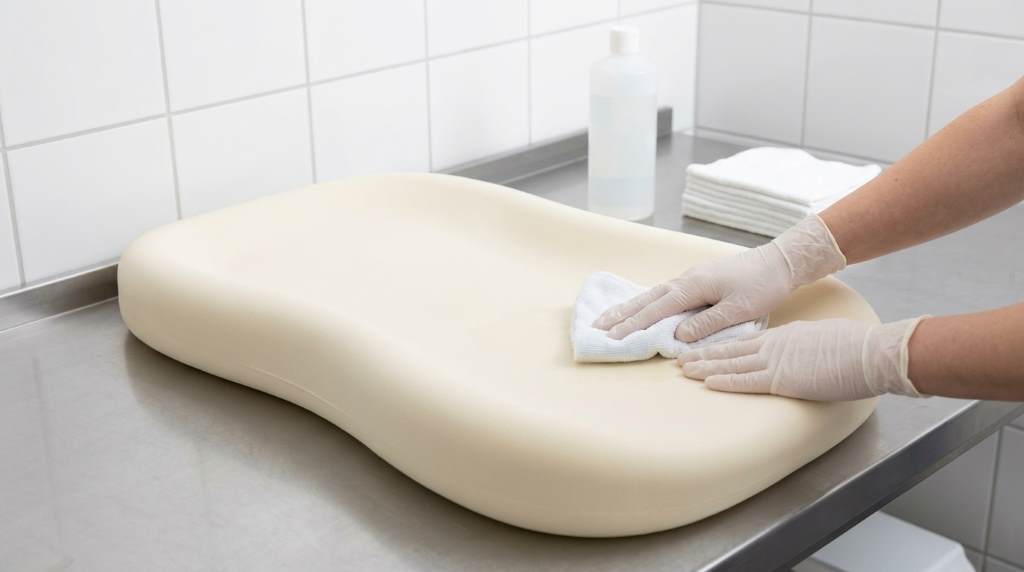
Clean baby changing pads after every messy diaper change, then disinfect them when contamination occurs. For routine care, use warm water, mild soap, and a soft cloth unless the manufacturer gives different instructions. Newborns may need 10 to 12 diaper changes daily, while older babies often need six to eight. Therefore, a simple cleaning routine quickly becomes essential for maintaining a hygienic changing area. Whether you use waterproof foam, fabric, vinyl, or a portable mat, the material determines the safest method. The right approach removes residue without damaging protective coatings or leaving harsh cleaner behind.
Throughout this guide, you will find practical methods for cleaning baby changing pads without unnecessary products or complicated routines. You will also learn when cleaning differs from disinfecting and when replacement makes more sense.
Key Takeaways
- Wipe waterproof changing pads after every diaper change involving visible residue.
- Use mild soap and warm water for routine cleaning unless instructions specify otherwise.
- Never soak a pad unless the manufacturer specifically permits immersion.
- Wash removable fabric covers according to their care labels and drying requirements.
- Disinfect contaminated surfaces according to the disinfectant label and required contact time.
- Dry every component completely before placing your baby on the pad.
Start With the Pad’s Material
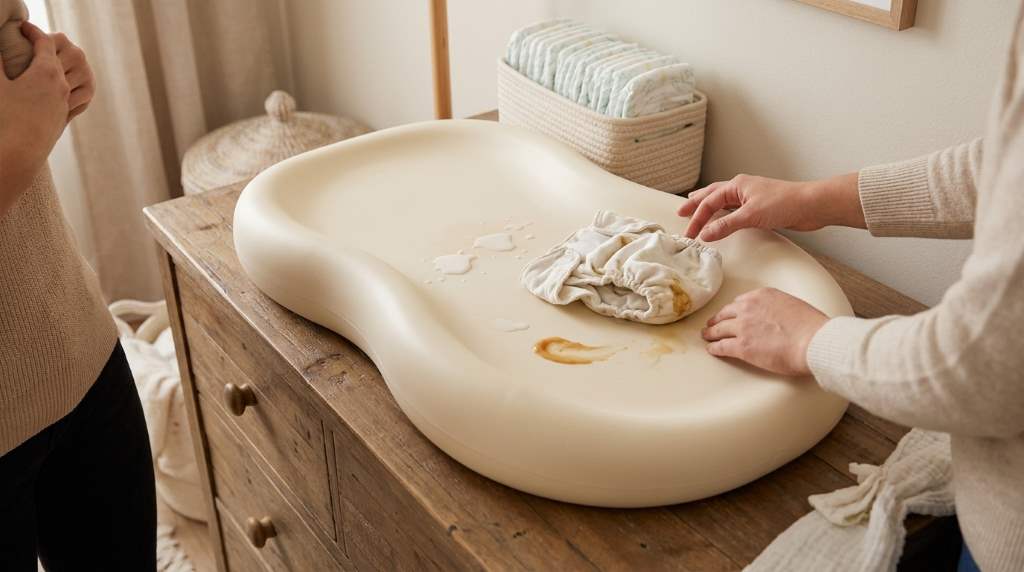
Before cleaning, identify whether your pad has waterproof foam, vinyl, fabric, or multiple layers. Manufacturers often design each material for a specific cleaning method. Therefore, check the care label or product instructions before applying any cleaner.
Wipe-clean pads usually need less water because their nonabsorbent surfaces resist liquid penetration. In contrast, fabric covers can usually handle washing when their labels permit machine or hand washing.
Waterproof and Wipe-Clean Pads
Most waterproof pads need only a damp cloth and mild detergent for routine cleaning. First, remove loose residue with a paper towel or disposable wipe. Next, wipe the entire surface with your cleaning solution, including edges and seams.
Afterward, use a clean damp cloth to remove soap residue. Finally, dry the surface completely with a soft towel or let it air dry. This simple process protects waterproof coatings while removing everyday grime.
Fabric-Covered Changing Pads
Fabric covers require different care because they can absorb urine, stool, creams, and moisture. Remove the cover carefully and inspect the insert for any contamination. Then follow the cover’s washing instructions instead of assuming every fabric tolerates hot water.
Use a mild, fragrance-free detergent when the care label allows it. Avoid excessive detergent because leftover residue can irritate sensitive skin. Most importantly, dry the cover completely before reinstalling it.
What You Need Before Cleaning
A small cleaning kit makes diaper-area cleanup faster and more consistent. Fortunately, you do not need a cabinet full of specialized products.
- Soft microfiber cloths or clean cotton cloths
- Warm water
- Mild dish soap or manufacturer-approved mild detergent
- Paper towels for removing heavy messes
- Appropriate disinfectant for contaminated nonporous surfaces
- Clean towel for final drying
- Disposable gloves when handling significant bodily-fluid contamination
Keep these supplies away from your baby’s reach during diaper changes. Also, never leave your baby unattended while reaching for cleaning supplies.
How To Clean a Baby Changing Pad Step by Step
1. Move Your Baby to a Safe Location
Always place your baby somewhere safe before starting the cleaning process. A clean crib or supervised floor area works better than leaving your baby beside the pad.
Next, gather your cleaning supplies before touching the dirty surface. This prevents you from repeatedly moving between the changing area and another room.
2. Remove Visible Waste
Use a paper towel or disposable wipe to remove stool, cream, and other visible residue. Work from the cleanest area toward the dirtiest area. Then discard the waste immediately in an appropriate lined container.
Do not scrub heavy contamination aggressively because friction can damage some waterproof finishes. Instead, soften stubborn residue with warm water before wiping again.
3. Wash the Surface
Mix warm water with a small amount of mild soap when the manufacturer’s instructions permit it. Dampen a soft cloth rather than flooding the entire pad. Then wipe the surface methodically from one end toward the other.
Pay special attention to seams, corners, raised edges, and areas beneath the baby’s legs. These locations can collect residue even when the center looks clean.
4. Remove Soap Residue
After washing, use another cloth dampened with clean water. Wipe the entire surface until no slippery or soapy residue remains. This step matters because cleaning products can remain against your baby’s skin.
However, avoid excessive rinsing when the pad contains foam or absorbent layers. Follow the manufacturer’s instructions whenever they limit water exposure.
5. Dry the Pad Completely
Dry the pad with a clean towel, then allow it to air dry if necessary. Never cover or store a damp pad because trapped moisture encourages unpleasant odors.
Additionally, inspect seams and folds before reuse. If moisture remains inside a fold, keep drying until every area feels completely dry.
When Should You Disinfect the Changing Pad?
Routine cleaning removes dirt and residue, while disinfection targets microorganisms on suitable surfaces. You should not automatically use strong disinfectants after every ordinary diaper change.
Instead, disinfect when the surface becomes contaminated with stool, urine, blood, or other bodily fluids. Follow the product label carefully because disinfectants require specific wet contact times.
Never assume that wiping a disinfectant away immediately provides adequate disinfection. Some products require the surface to remain visibly wet for several minutes.
Cleaning Versus Disinfecting
| Task | Purpose | Typical Approach |
|---|---|---|
| Routine cleaning | Removes dirt, residue, and everyday grime | Warm water, mild soap, and soft cloth |
| Deep cleaning | Addresses accumulated residue and odors | Thorough washing and complete drying |
| Disinfection | Reduces microorganisms after contamination | Compatible disinfectant used according to its label |
| Cover washing | Removes absorbed contamination from fabric | Care-label-approved washing and drying |
How To Clean Fabric Changing Pad Covers
Remove a washable cover immediately after a significant diaper leak or stool accident. Check the insert underneath before washing because contamination can travel through seams.
Pre-treat visible stains only with a product compatible with the fabric. Then wash the cover using the recommended cycle, temperature, and detergent.
After washing, inspect the cover before drying it completely. If stains remain, repeat an appropriate treatment rather than using increasingly harsh chemicals.
Can You Put a Changing Pad in the Washing Machine?
Sometimes, but only when the manufacturer specifically allows machine washing. Many wipe-clean pads contain foam or waterproof layers that can suffer damage during washing.
Therefore, check whether the instructions permit washing the entire pad or only its removable cover. Never assume that a washable cover means the foam insert can also enter the machine.
How To Remove Common Changing Pad Stains
Urine Stains
Fresh urine usually responds well to prompt cleaning with warm water and mild soap. Wipe the affected area thoroughly, then rinse away soap residue with a clean damp cloth.
If an odor remains, inspect seams and the underside for trapped moisture. Persistent smell often indicates contamination reached an absorbent layer.
Diaper Cream Residue
Diaper creams can leave greasy films that ordinary water cannot remove effectively. Use a small amount of mild detergent on a soft cloth, then wipe gently.
Afterward, clean the area with plain water to remove detergent and remaining cream. Avoid abrasive pads because they can roughen waterproof surfaces.
Stool Stains
Remove solid material first, then clean the contaminated area with warm soapy water. Follow with an appropriate disinfectant when the surface material allows disinfection.
Most importantly, follow the disinfectant’s required contact time. Afterward, allow the surface to dry completely before returning it to normal use.
Persistent Odors
Lingering odors usually indicate trapped moisture, absorbed contamination, or residue inside seams. First, clean every accessible surface and allow the pad to dry completely.
If the odor returns quickly, inspect the pad’s waterproof barrier and internal foam. A damaged or contaminated interior may require replacement rather than repeated chemical treatment.
Cleaning Different Types of Changing Pads
Waterproof Foam Pads
Wipe waterproof foam pads with a damp cloth and mild cleaner when permitted. Avoid soaking them unless the manufacturer explicitly approves immersion.
Because foam can retain moisture, dry these pads carefully after every substantial cleaning. Never fold or store them while damp.
Vinyl Changing Pads
Vinyl surfaces generally respond well to gentle wiping and mild detergent. However, harsh chemicals and abrasive scrubbing can damage the finish over time.
For disinfection, choose a product compatible with vinyl and follow its label directions. Then allow the required contact time before wiping or air drying.
Portable Changing Mats
Portable mats often use waterproof fabrics or coated materials for quick cleanup. Wipe away residue immediately and avoid carrying a visibly soiled mat inside a diaper bag.
When the mat allows washing, follow its specific instructions for temperature and drying. Always dry it completely before folding it for storage.
What Cleaning Products Should You Avoid?
Strong cleaners can damage waterproof coatings, fabric finishes, foam, adhesives, or printed surfaces. Therefore, start with the mildest cleaner that effectively removes the mess.
- Abrasive powders that can scratch waterproof surfaces
- Harsh solvents that can damage synthetic coatings
- Undiluted chemicals not approved for the pad material
- Excessive bleach when the manufacturer does not permit it
- Strong fragrances that leave unnecessary residues
- High heat that can damage foam, waterproof layers, or adhesives
Also, never mix cleaning chemicals together. Combining products can create dangerous fumes or unwanted chemical reactions.
How Often Should You Clean a Baby Changing Pad?
Clean visible messes immediately rather than waiting for a scheduled cleaning. For routine diaper changes, wipe the waterproof surface whenever residue or moisture appears.
Perform a more thorough cleaning regularly, especially when your baby experiences frequent leaks. Fabric covers may need washing more often because they absorb moisture and creams.
However, frequency should follow the pad’s material, your baby’s diaper habits, and the manufacturer’s care instructions. A heavily used pad generally needs more frequent attention than an occasional travel mat.
How To Prevent the Pad From Getting Dirty
Prevention can reduce cleaning time without replacing proper hygiene. Start by keeping diapers, wipes, cream, and spare clothing within easy reach.
- Use a washable or disposable liner when appropriate.
- Change diapers promptly after bowel movements.
- Keep diaper cream away from unnecessary pad surfaces.
- Clean leaks immediately instead of allowing them to dry.
- Keep spare covers available for unexpected messes.
- Store portable mats separately when they become soiled.
Additionally, keep the changing area organized so cleanup takes only a few minutes. A consistent setup makes good hygiene easier during exhausting nighttime changes.
Inspect the Pad While You Clean It
Cleaning provides an excellent opportunity to check the pad’s condition. Look for cracked surfaces, exposed foam, loose stitching, damaged straps, and peeling waterproof layers.
Pay particular attention to seams because damage can allow moisture to enter internal materials. Replace the pad when cleaning no longer restores a hygienic, intact surface.
A clean pad is not automatically a safe pad if its structure has deteriorated. Therefore, combine cleaning with regular safety inspections.
What To Do After a Major Diaper Leak
A major leak requires more than a quick surface wipe. First, remove your baby and contain the contaminated clothing and diaper separately.
Next, remove visible contamination from the pad and inspect every exposed area. Clean the surface thoroughly before using an appropriate disinfectant for that material.
Finally, follow the disinfectant’s contact-time instructions and allow complete drying. Wash your hands thoroughly after finishing the cleanup.
Common Cleaning Mistakes to Avoid
Many cleaning problems happen because caregivers use too much water or overly strong products. Fortunately, most mistakes disappear when you follow the manufacturer’s care instructions.
- Do not soak a pad that the manufacturer says to wipe clean.
- Do not use abrasive tools on waterproof surfaces.
- Do not leave soap residue on the baby’s contact area.
- Do not store the pad while it remains damp.
- Do not disinfect without checking material compatibility.
- Do not mix different cleaning products.
- Do not rely on the safety strap as a substitute for supervision.
Most importantly, never clean the pad while your baby remains unattended nearby. Move your baby first, then focus completely on the cleanup.
A Simple Cleaning Routine for Busy Parents
For everyday maintenance, remove visible mess, wipe with mild soap, rinse, and dry. This routine handles most ordinary contamination without unnecessary complexity.
For heavier contamination, add an appropriate disinfection step after cleaning. Then allow the required contact time and complete drying before reuse.
For washable covers, remove them promptly and follow their care instructions. Keep an extra clean cover available so you never need to reuse a damp one.
Frequently Asked Questions
Can I Use Baby Wipes to Clean a Changing Pad?
Yes, baby wipes can remove light residue, but follow with proper cleaning when contamination occurs.
Can I Use Dish Soap on a Changing Pad?
Yes, mild dish soap usually works for compatible waterproof surfaces, but always follow manufacturer instructions.
Can I Wash a Baby Changing Pad?
Only wash the entire pad when its manufacturer specifically approves machine or hand washing.
How Do I Disinfect a Baby Changing Pad?
Clean visible soil first, then use a compatible disinfectant according to its label and required contact time.
How Do I Stop My Changing Pad From Smelling?
Clean residue promptly, dry the pad completely, and replace it if odor persists from damaged internal materials.
Final Thoughts
Cleaning a baby changing pad does not require an elaborate routine or aggressive chemicals. Start with the correct material-specific method, remove visible contamination promptly, and dry every component thoroughly.
When contamination requires disinfection, choose a compatible product and follow its instructions exactly. Finally, inspect the pad regularly and replace it when damage compromises cleanliness or structural integrity.
Make this routine part of every diaper-changing setup today. A few consistent cleaning habits can keep your baby’s changing area fresher, safer, and easier to manage.