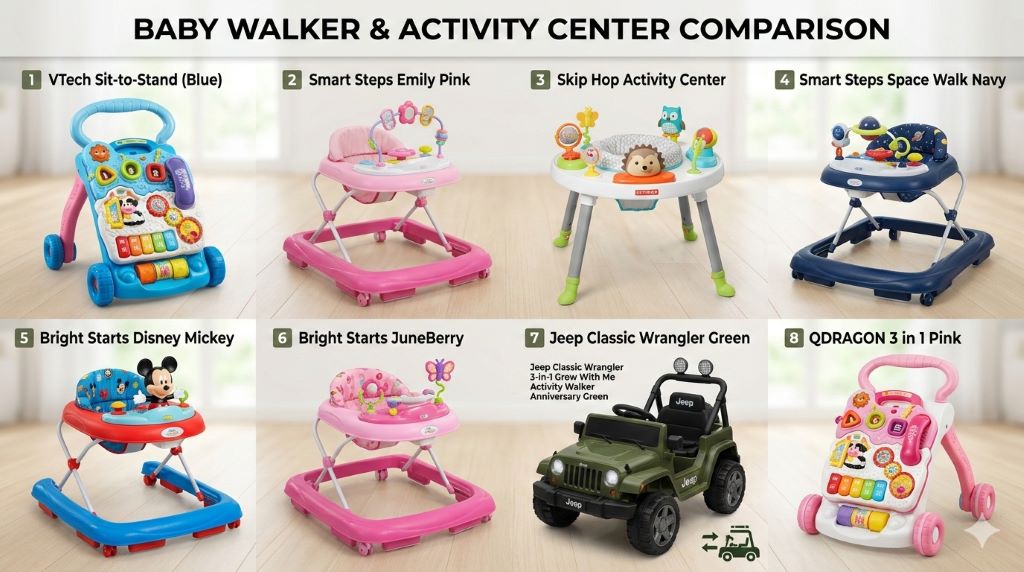
Baby walkers have been a staple in many households for decades. However, recent studies and expert opinions highlight both the benefits and risks associated with their use. According to the American Academy of Pediatrics (AAP), baby walkers do not help babies learn to walk faster and can even delay motor development if used improperly. In fact, thousands of children are treated in emergency rooms each year due to walker-related injuries, such as falls, tip-overs, and entrapment.
But not all baby walkers are created equal. With the right features and responsible use, a baby walker can provide a safe space for your child to practice movement and build confidence. The key is knowing what to look for and how to use it correctly.
Understanding the Risks and Benefits of Baby Walkers
The Risks: What Every Parent Should Know
The most common risks associated with baby walkers include:
- Falls and Tip-Overs: Baby walkers can tip over or roll down stairs, especially if they have wheels and are used near steps or uneven surfaces. The Consumer Product Safety Commission (CPSC) reports an average of 2,467 injuries per year among children under five due to walkers, jumpers, or exercisers.
- Delayed Motor Development: Some studies suggest that excessive use of baby walkers can delay natural motor development, as babies may rely on the walker rather than learning to balance and walk on their own.
- Entrapment and Pinching: Poorly designed walkers can cause fingers or toes to get caught in hinges or between parts.
The Benefits: When Used Safely
When used correctly and in moderation, baby walkers can offer:
- Support for Early Mobility: Walkers can help babies who are learning to stand and scoot, giving them the confidence to move around.
- Entertainment and Engagement: Many modern walkers come with interactive toys, music, and lights, which can stimulate your baby’s senses and keep them engaged.
- Convenience for Parents: A walker can give parents a few hands-free moments while keeping their baby safe and entertained.
Key Features to Look for in a Safe Baby Walker
1. Stability and Base Width
A wide, sturdy base is the most important safety feature. Look for walkers with a broad base that prevents tipping, especially on uneven floors. New safety standards, such as EN 1273:2020 and ASTM F977, now require advanced friction strips and stair-fall protection as standard features.
- Tip: Test the walker on your home’s flooring before regular use. If it wobbles or moves too easily, it’s not safe.
2. Height Adjustability
Babies grow quickly, so a walker with adjustable height settings ensures a proper fit. Your baby’s feet should touch the ground comfortably, allowing them to push off and move naturally.
- Tip: Choose a walker with at least three height adjustments to accommodate growth spurts.
3. Wheel and Brake System
Wheels should have a locking mechanism or friction strips to prevent sudden movements. Some models feature “stop ‘n’ go” bases that automatically brake if one wheel goes over a step or uneven surface.
- Tip: Avoid walkers with small, hard wheels, as they can get stuck or move too fast.
4. Seat Comfort and Support
The seat should be well-padded, breathable, and easy to clean. Removable, machine-washable seats are a plus for busy parents.
- Tip: Check for a high backrest to support your baby’s posture.
5. Interactive and Educational Features
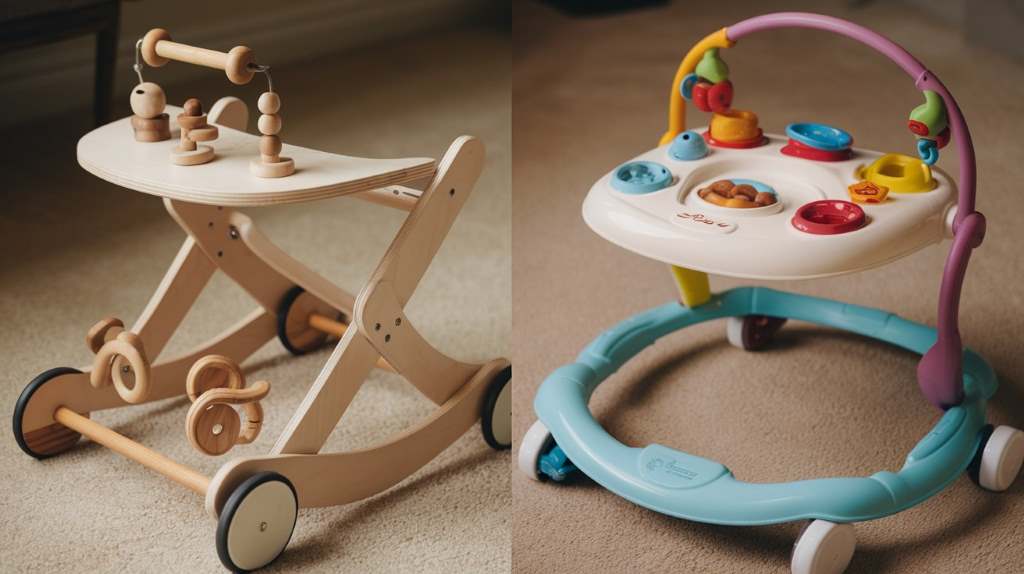
Walkers with removable toy trays, music, and lights can keep your baby engaged and support cognitive development. Look for non-toxic, BPA-free materials, especially if your baby tends to chew on toys.
- Tip: Choose walkers with toys that are easy to clean and replace.
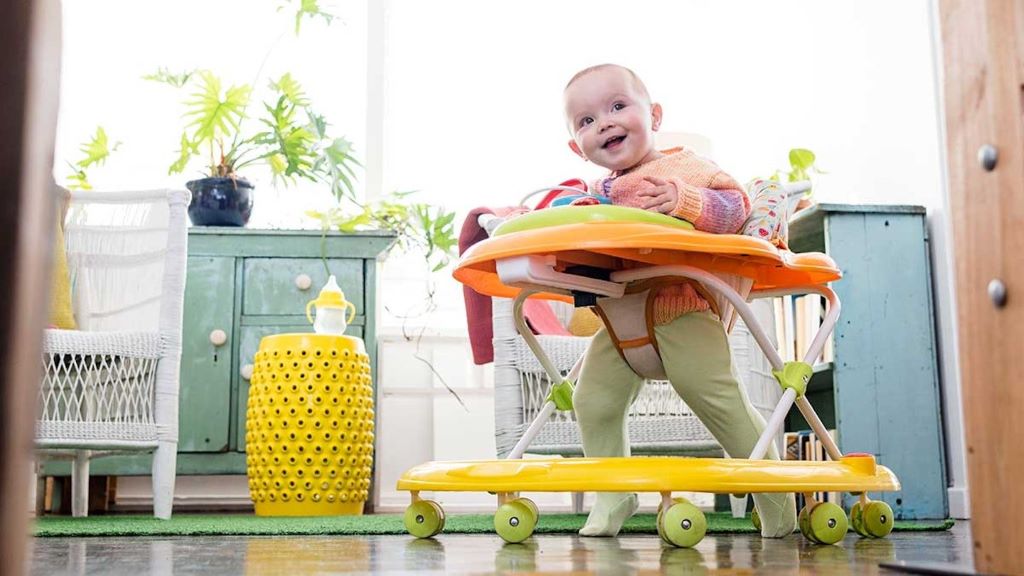
Age and Developmental Readiness: When to Introduce a Baby Walker
The Right Age
Most pediatricians recommend introducing a baby walker only when your child can sit upright without support, usually between 6 and 8 months. However, every baby develops at their own pace. Never use a walker before your baby can hold their head up steadily.
Signs Your Baby Is Ready
- Your baby can sit independently.
- They show interest in standing or pulling themselves up.
- They can place their feet flat on the ground when seated in the walker.
How to Use a Baby Walker Safely
Supervision Is Key
Never leave your baby unattended in a walker, even for a moment. Most accidents happen when parents are nearby but distracted.
Limit Usage Time
Experts recommend limiting walker use to 15–20 minutes per day. This prevents over-reliance and encourages natural movement and exploration.
Create a Safe Environment
- Use the walker only on flat, even surfaces.
- Keep it away from stairs, pools, and hot surfaces.
- Remove cords, rugs, and small objects that could cause tripping or choking.
Alternatives to Traditional Baby Walkers
If you’re concerned about the risks, consider these safer alternatives:
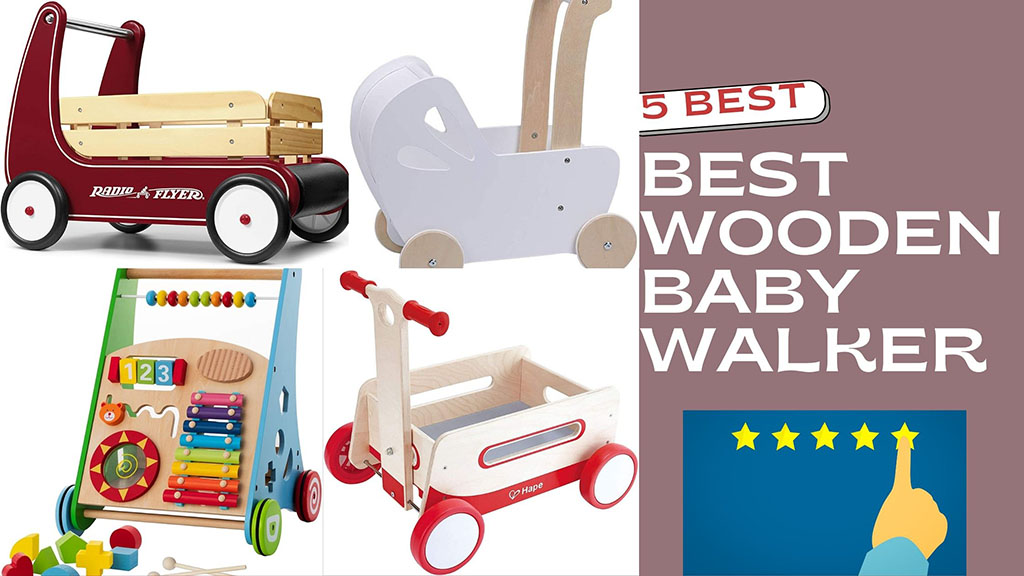
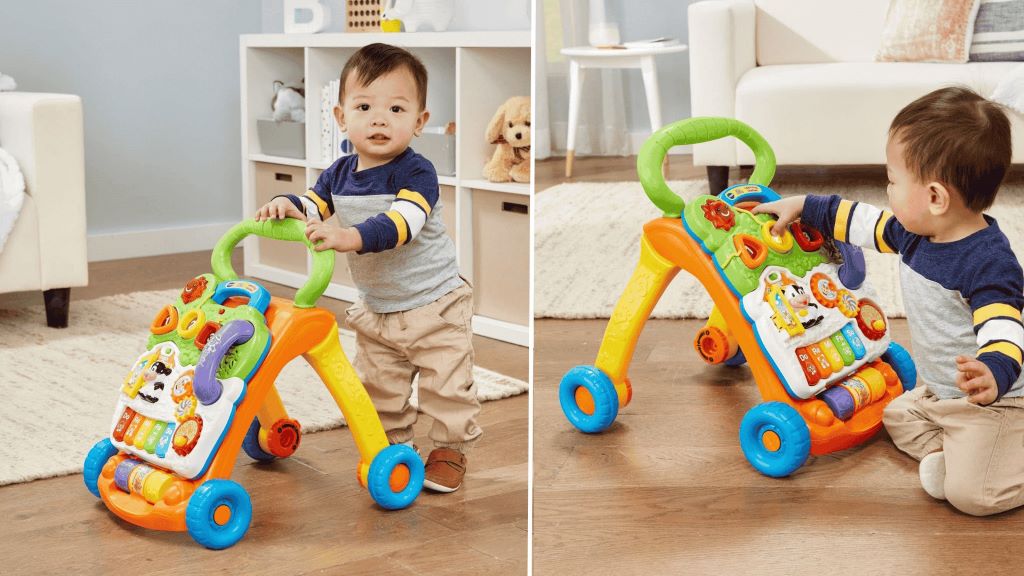
- Push Walkers: These allow babies to push a sturdy frame while walking, promoting balance and coordination.
- Activity Centers: Stationary centers with interactive toys encourage movement without the risk of tipping.
- Playpens with Activity Panels: These provide a safe space for babies to play and explore.
FAQs About Baby Walkers
Are baby walkers safe for my baby?
Baby walkers can be safe if you choose a model with a wide base, proper brakes, and use it under constant supervision. However, they are not risk-free, and many experts recommend alternatives like push walkers or activity centers.
Do baby walkers help babies walk faster?
No, baby walkers do not help babies learn to walk faster. In fact, some studies suggest they may delay natural walking development.
What is the best age to introduce a baby walker?
Most babies are ready for a walker between 6 and 8 months, but always check for developmental readiness, such as sitting independently and showing interest in standing.
How long should my baby use a walker each day?
Limit walker use to 15–20 minutes per day to encourage natural movement and prevent over-reliance.
What are the safest baby walker brands in 2026?
Look for brands that comply with the latest safety standards, such as EN 1273:2020 and ASTM F977. Popular choices include models with wide bases, adjustable heights, and interactive features.
Conclusion: Making the Best Choice for Your Baby
Choosing the best baby walker is about balancing fun, safety, and developmental needs. Always prioritize stability, adjustability, and supervision. Remember, no walker replaces the importance of floor play and natural exploration.
Call to Action: Have you used a baby walker with your little one? Share your experiences or tips in the comments below! And if you found this guide helpful, don’t forget to share it with other parents.