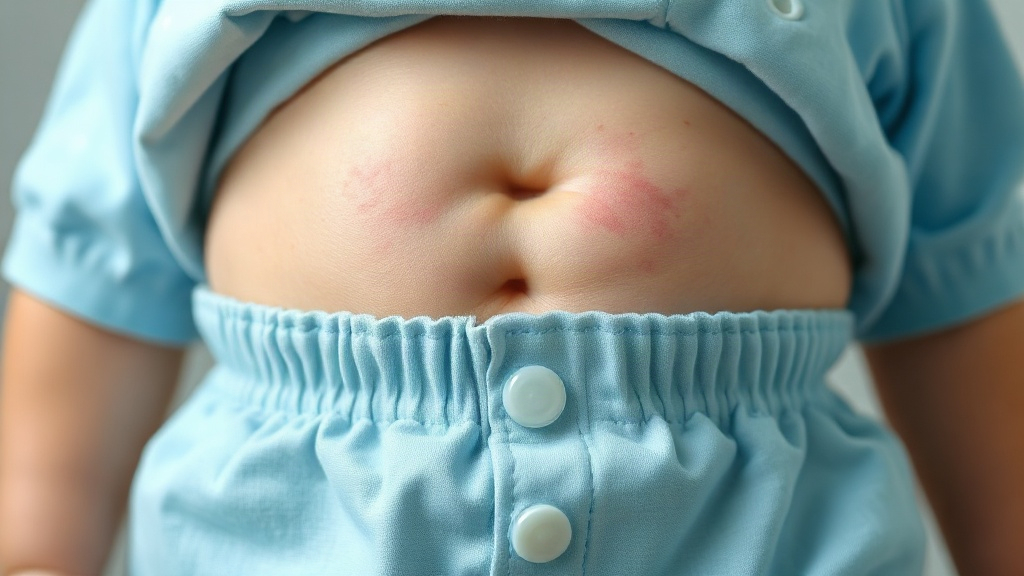
You lift your baby’s onesie and notice a red, angry ring right where the diaper waistband presses against the belly. The rash sits above the diaper, not inside it, which makes you wonder what could possibly be irritating that spot. Diaper Rash Around the Belly Button: Causes, Care, and When to Call a Doctor is the question many parents type at midnight, and the answer starts with the waistband itself.
Quick answer: Most belly-button and waistband rashes come from friction, trapped moisture, or a snug diaper edge rubbing the skin. Loosen the fastening, clean and dry the area gently, apply a thin barrier cream, and give the skin air time. See a doctor if the rash spreads, blisters, oozes, or comes with fever.
This guide explains the common triggers, the care steps that actually help, the mistakes that prolong irritation, and the warning signs that mean a medical visit.
What is Diaper Rash Around the Belly Button: Causes, Care, and When to Call a Doctor?
This type of rash is irritation that appears on the abdomen, often in a curve that follows the diaper’s top edge. It can sit directly below or beside the navel, and sometimes circles it. Because the location is above the absorbent core, it behaves differently from a classic diaper rash on the buttocks.
The skin here is thinner and less padded than the buttocks, so it reacts faster to rubbing and heat. A diaper left on for a long stretch, a car seat harness pulled snug, or a swaddle that grips the middle can all trap warmth at the same band of skin. Look closely at the pattern: a line that tracks the waistband points to pressure, while redness that drifts upward in warm folds suggests moisture or yeast.
The most common causes
- Friction: A tight waistband or stiff diaper edge rubs the same patch of skin dozens of times a day.
- Trapped moisture: Sweat and drool collect under the waistband, softening the skin and making it easier to irritate.
- Contact irritation: Soaps, fragrances, or leftover detergent in clothing can trigger redness where fabric presses.
- Yeast: Candida thrives in warm, damp folds and can spread upward from the diaper area.
- Allergy: Some babies react to dyes, adhesives, or elastic materials in diapers and wet wipes.
How to tell the types apart
A simple friction rash looks red and slightly rough, and it matches the shape of the waistband. Yeast tends to be bright red with small satellite bumps just outside the main patch. An allergic reaction often appears quickly and may look raised or hive-like.
Comparison: friction rash vs. yeast rash
| Feature | Friction rash | Yeast rash |
|---|---|---|
| Shape | Matches the waistband line | Spreading patch with scattered dots |
| Texture | Slightly rough, flat | Slightly raised, defined edges |
| Response to barrier cream | Improves in 2–3 days | Little or none without treatment |
Yeast rashes usually need an antifungal cream, which a doctor or pharmacist can recommend.
A standard diaper cream keeps moisture out, but washing and air drying matter more for waistband rashes. The moisture source is sweat, not urine.
The takeaway: identify whether the rash follows a line, spreads with dots, or appeared suddenly, because each pattern points to a different cause.
Why Diaper Rash Around the Belly Button: Causes, Care, and When to Call a Doctor matters
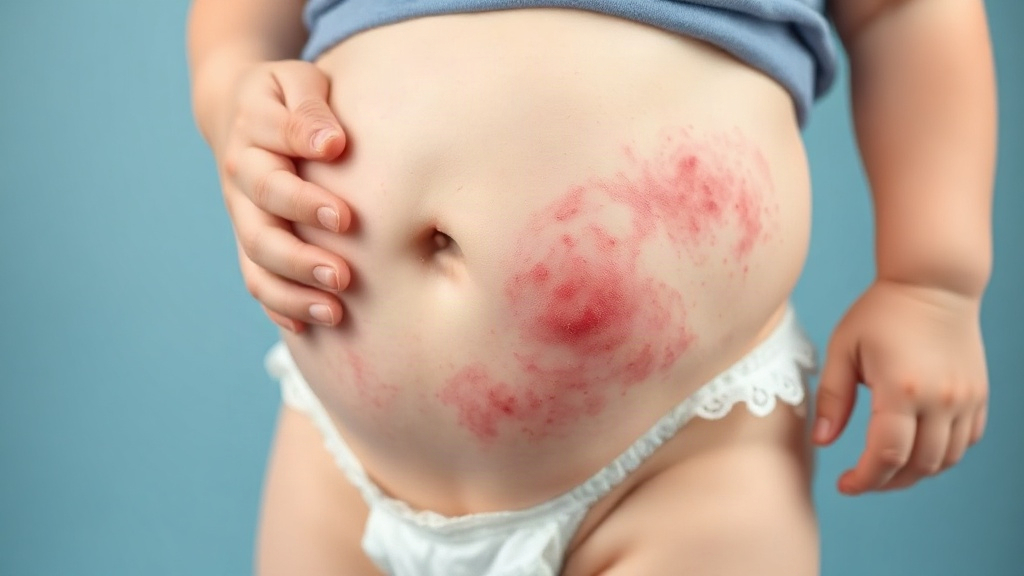
This rash deserves attention because the waistband sits on skin that stays covered most of the day. A newborn can wear a diaper around the clock, and a snug edge keeps pressing on the same spot during every nap and every feed. Left alone, mild redness can turn into broken skin within a day or two.
Track how the skin looks at each change rather than once a day, because a waistband rash can shift within hours. Take a quick photo on your phone in the same light to compare progress honestly. If you dread opening the diaper because the last change made your baby cry, that reaction is itself a reason to act sooner rather than wait and see.
It is easy to miss until it hurts
Parents often check the diaper area during changes and never lift the front waistband high enough to see the belly. By the time the rash is visible, the skin may already sting when touched. A baby who cries during changes or squirms when you touch the abdomen is telling you something.
Discomfort affects feeding and sleep
A sore tummy can make a baby fussier at mealtime and harder to settle at night. That tiredness ripples through the whole household. Fixing the rash early usually means fewer wake-ups and calmer changes.
Some causes need more than cream
Untreated yeast spreads quickly in warm folds. An allergic reaction can worsen with continued exposure to the trigger. Bacterial infection can follow cracked skin if bacteria enter the area. A doctor’s visit closes the gap when home care stalls.
If the rash is not improving within three days of consistent home care, or looks worse each day, contact your pediatrician.
Practical reasons to act fast
Cleanup and treatment take only a few minutes at each change. Catching the rash early also saves money on creams and wipes you would otherwise buy. Small consistent steps beat an expensive cream used on damaged skin.
The takeaway: early attention is simpler than late treatment, and a rash that keeps returning signals a cause you have not fixed yet.
Best practices
Good care follows a simple order: clean, dry, protect, then reduce pressure. Do each at every diaper change until the skin looks clear, which typically takes a few days for mild irritation.
Set a timer for the air-drying step so it is not rushed or skipped during busy mornings. When you reach for a new diaper, alternate fastening angles slightly so the tabs do not press the same two points every time. At night, a larger size gives extra room for the belly to rest without a firm edge.
Clean gently
Use warm water and a soft cloth, or a fragrance-free wipe, and pat rather than rub. Avoid lifting the diaper edge sharply against the skin. At bath time, let water run over the area without scrubbing.
Dry fully before anything else
Pat the belly and around the navel dry, then let air reach the skin for a few minutes. A hair dryer on the cool setting, held well away from the body, can speed this up. Moisture trapped under a cream is the reason many barrier products fail.
Apply a barrier cream correctly
Use a cream with zinc oxide or petrolatum and apply a thin layer like frosting on a cake. Thick layers trap heat and can hinder the skin’s healing. For a waistband rash, extend the cream slightly above the diaper line.
Reduce pressure on the spot
Fasten the diaper so two fingers slide under the waistband. If the rash sits right at the edge, fold the top edge outward once. Try a different brand or size for a week to see if the elastic or adhesive is the trigger.
Use plain water wipes and unscented detergent
Perfume is a frequent culprit on the abdomen. Rinse wipes under water if your baby is sensitive. Wash onesies with unscented detergent and skip the fabric softener.
Give daily air time
Ten to fifteen minutes of diaper-free time on a washable pad helps more than most creams. Do it after a feed when leaks are least likely. Add a loose cotton shirt to keep the waistline off the skin.
The takeaway: the routine that works is short and repeated; consistency matters more than the price of the cream.
Common mistakes to avoid
Many persistent belly rashes are the result of a small habit repeated at every change. Removing one of these mistakes often clears the skin faster than adding a new product.
Double-check what sits between the diaper and the skin. A tucked-in onesie, a tight bodysuit snap, or a plastic cover layered over cloth can hold heat and moisture against the belly all day. Leaving a little slack in the fabric at the waist removes a hidden source of rubbing that cream cannot fix.
Overtightening the diaper
Parents often pull the tabs tight to prevent leaks, especially overnight. That pressure digs the waistband into the abdomen. Fasten it snug enough to hold, but not so tight that it leaves marks.
Skipping the drying step
Cream applied over damp skin seals moisture in. Rubbing with a towel immediately after wiping leaves the surface wet. Wait until the skin feels dry to the touch before applying anything.
Using too much cream
A layer thick enough to look white and clean is enough. Extra product does not add protection and can stop the skin from breathing. A little on the navel fold is fine, but avoid packing cream into the belly button itself.
Switching products too quickly
Every new cream, wipe, or diaper needs a few days to show whether it helps. Changing all three at once makes it impossible to know what worked. Change one item at a time.
Babies can inhale powder particles, and talc is no longer recommended for infant care. Stick with zinc-based creams instead.
Ignoring a yeast pattern
Treating a yeast rash with plain barrier cream will not clear it. Bright red color with satellite bumps needs an antifungal. A pharmacist can advise on an over-the-counter option for a baby older than two months.
Rubbing instead of patting
Friction worsens friction rashes. Pat to clean and pat to dry. A soft cloth pressed gently rather than dragged across the skin makes a real difference.
The takeaway: most lingering rashes need one fewer product and one more minute of drying, not an entire new routine.
FAQ
How long does a waistband rash usually take to clear?
Mild friction rashes often improve within two to three days once the pressure and moisture are corrected. Yeast rashes can take about a week with antifungal treatment, sometimes longer. If the skin is not improving after three days of consistent care, see your pediatrician.
Can I still use cloth diapers with a belly rash?
Yes, but switch to a looser fit and a fragrance-free detergent for the covers. Many cloth diapers have elastic that sits higher on the abdomen. A cotton liner between the skin and the diaper can reduce friction while the skin heals.
Should I bathe my baby more often during a rash?
One daily bath is enough for most babies, and frequent washing can strip the skin further. Pat dry and leave the belly area open to air for a few minutes after the bath. Skip bubble bath and scented soaps until the skin is clear.
When should I call the doctor instead of trying home care?
Call if the rash blisters, oozes pus, feels warm, or spreads beyond the diaper area. A fever of 100.4°F (38°C) or higher in a baby under three months needs prompt attention. Persistent rashes that return after treatment also warrant a visit.
Conclusion
Diaper Rash Around the Belly Button: Causes, Care, and When to Call a Doctor comes down to spotting the cause early and keeping the routine simple. Friction, moisture, yeast, and allergy are the usual suspects, and each responds to a slightly different change. Loosen the waistband, dry the skin fully, use a thin barrier cream, and give the area daily air time before you buy another product.
If the rash spreads, blisters, or does not improve in a few days, book a pediatric visit rather than waiting. Your next step: check the waistband fit at the next diaper change and adjust it before anything else.