
A reliable baby thermometer is one of those tools you only think about when you need it, and when you do, accuracy matters more than anything. According to the U.S. National Library of Medicine, even a one degree variation in a child’s temperature reading can influence medical decisions. The CDC also notes that infants under three months require immediate attention for fevers, which makes precise readings critical.
In Maryland, where seasonal shifts bring frequent colds, flu, and humidity related illnesses, parents tend to rely on thermometers that work quickly, quietly, and consistently. This guide breaks down real world performance of top baby thermometers that have been tested for everyday family use, not just lab claims.
A Quick Overview of The Best Baby Thermometer in Maryland
These are dependable options that balance speed, usability, and consistent readings for families.
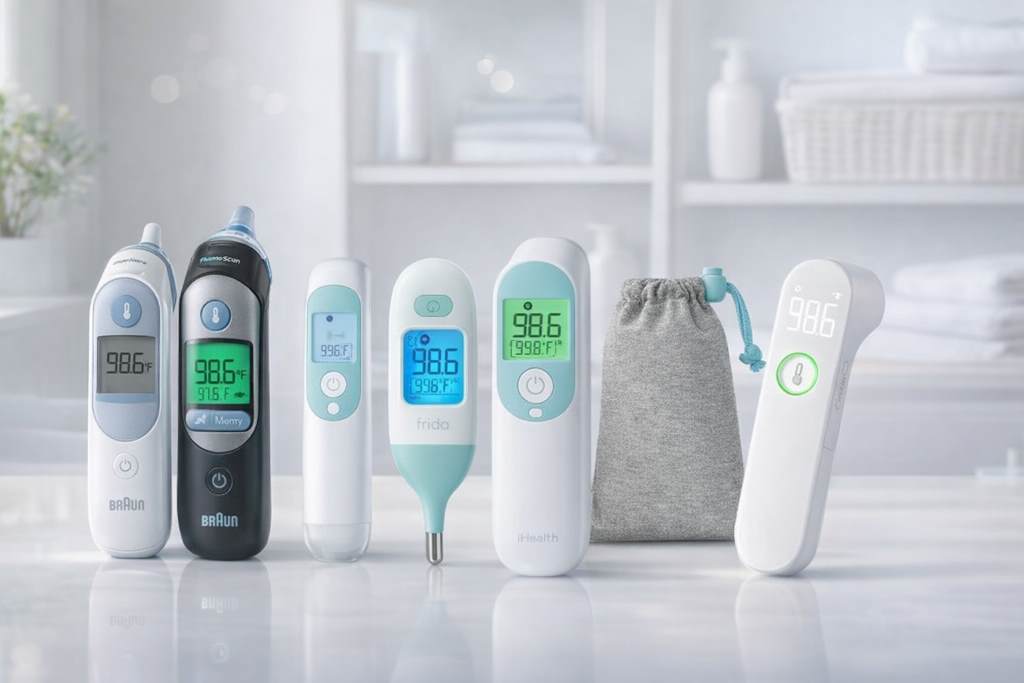
- Frida Baby Thermometer 3 in 1 Infrared
- GoodBaby No Touch Thermometer
- Frida Baby 3 in 1 Digital Thermometer
- GoodBaby Digital Thermometer Advanced
- Braun ThermoScan 7
- Braun ThermoScan 5
- Frida Baby Rectal Thermometer
- iHealth No Touch Forehead Thermometer
Best Baby Thermometer in Maryland of 2026
Choosing between thermometer types often comes down to how your child reacts during temperature checks. Some work best during sleep, others during active moments.
Frida Baby Thermometer 3 in 1 Infrared
Versatile infrared thermometer for multi mode use
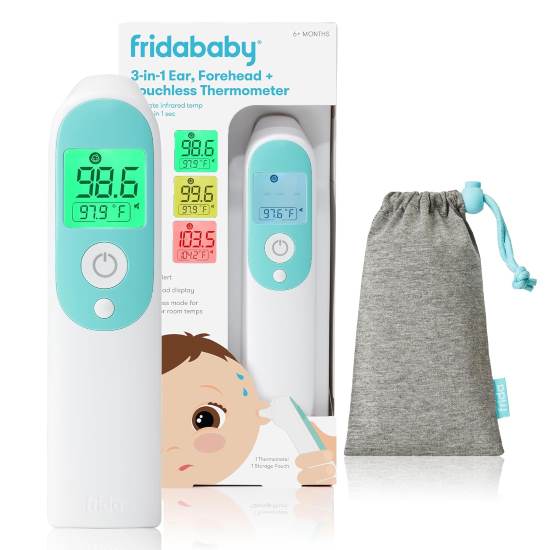
This model feels intuitive right out of the box. The grip is comfortable, and switching between forehead, ear, and touchless modes takes seconds. In daily use, it works well for quick checks when a baby is restless or asleep. The touchless mode helps during nighttime checks, especially in humid Maryland summers when children wake easily.
It suits families who want one device for everyone, including adults. Cleaning is simple since there are minimal contact surfaces. However, accuracy depends on proper positioning, especially in ear mode, which takes practice.
It may not be ideal for parents who prefer a single highly precise method like rectal readings for infants.
User Review
Amanda R., Baltimore
“I used this during flu season with my toddler and newborn. The touchless option saved us during night checks. It took a few tries to get consistent ear readings, but once I got used to it, it worked reliably.”
Key Features
- Three measurement modes: Allows flexibility depending on situation, though switching modes requires attention to avoid incorrect readings.
- Touchless operation: Reduces disturbance during sleep, but needs steady hand positioning.
- Fast readings: Provides results in seconds, useful for restless children.
- Color coded display: Helps interpret fever levels quickly, though lighting conditions can affect visibility.
- Memory tracking: Stores previous readings, helpful for monitoring trends over time.
- Compact design: Easy to carry during travel or pediatric visits.
Pros and Cons
| Pros | Cons |
| Multiple measurement options | Ear mode needs practice |
| Quick and quiet readings | Slight learning curve |
| Suitable for whole family | Sensitive to positioning |
GoodBaby No Touch Thermometer
Simple forehead and object thermometer
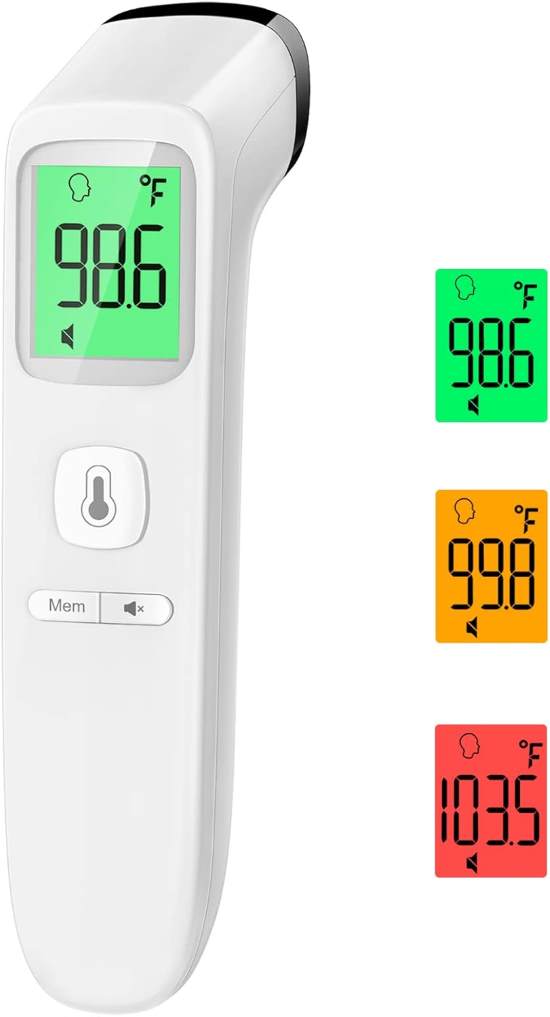
This thermometer focuses on simplicity. It works well for quick scans without waking a sleeping child. The silent mode is particularly useful at night, which matters for families dealing with frequent seasonal illnesses.
It performs best in stable indoor environments. In Maryland’s fluctuating humidity, readings can vary slightly if used immediately after coming indoors. It suits parents who want a no contact approach without handling multiple modes.
Maintenance is minimal, though keeping the sensor clean is essential for consistent accuracy.
It may not be ideal for those seeking clinical level precision for newborns.
User Review
David M., Annapolis
“We use this mostly at night. It’s quiet and fast, but I double check readings if the room temperature changes a lot.”
Key Features
- No touch infrared system: Hygienic and convenient, though requires correct distance.
- Dual mode reading: Can measure objects like milk bottles, adding practical value.
- Silent mode option: Prevents waking sleeping babies.
- Fever alarm system: Alerts clearly but may feel sensitive in borderline cases.
- Large digital display: Easy to read in low light.
- Lightweight design: Comfortable for one handed use.
Pros and Cons
| Pros | Cons |
| Fully contact free use | Sensitive to environment |
| Quiet night mode | Not clinical level precise |
| Easy one hand operation | Needs proper distance |
Frida Baby 3 in 1 Digital Thermometer
Traditional digital thermometer with flexible use
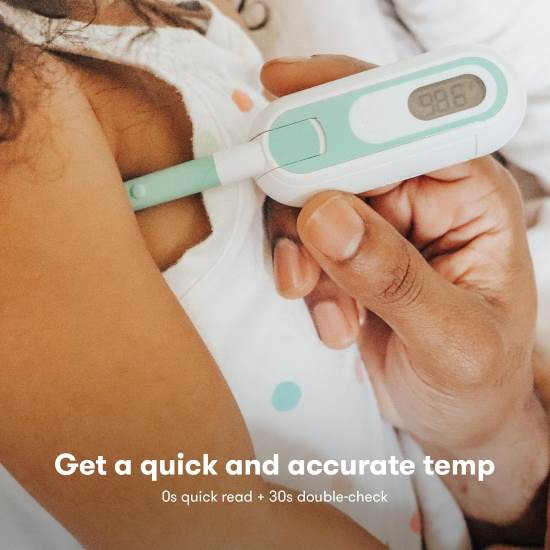
This model leans toward traditional measurement methods. It works for rectal, oral, and underarm readings, which gives parents more control over accuracy. In real use, it feels dependable, especially for infants where rectal readings are still considered most accurate.
It takes slightly longer than infrared models but delivers consistent results. Cleaning requires more effort, especially after rectal use, though the waterproof build helps.
This suits parents who prioritize accuracy over speed. It may feel less convenient for quick checks on active toddlers.
User Review
Sarah L., Rockville
“I trust this more than the no touch ones for my baby. It takes longer, but I feel more confident in the numbers.”
Key Features
- Multi method measurement: Offers flexibility across age groups.
- Water resistant design: Makes cleaning easier after use.
- Quick digital response: Faster than older thermometers but still not instant.
- Clear display: Easy to read without confusion.
- Compact storage case: Keeps it hygienic during travel.
- Flexible tip design: Improves comfort during use.
Pros and Cons
| Pros | Cons |
| High accuracy readings | Slower than infrared |
| Multiple measurement methods | Requires cleaning effort |
| Reliable for infants | Less convenient for toddlers |
GoodBaby Digital Thermometer Advanced
Balanced digital thermometer for daily use
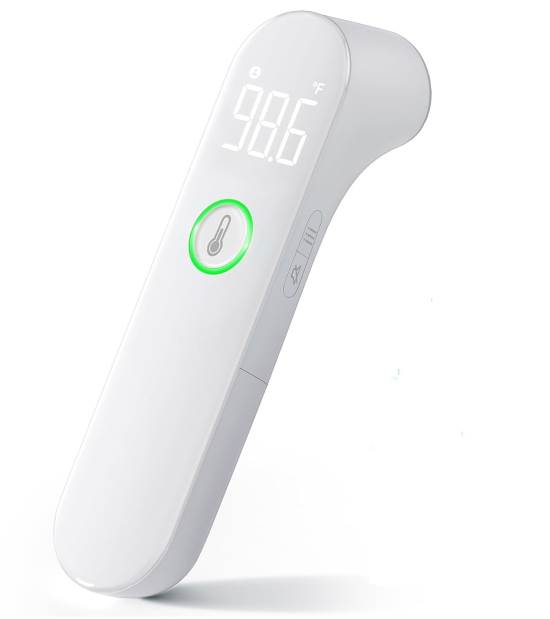
This model sits between traditional and modern designs. It offers quick readings with a simple interface. In practice, it works well for families who want a straightforward thermometer without learning multiple modes.
It performs consistently across different conditions, which is useful during Maryland’s seasonal changes. The mute mode helps during nighttime checks.
It suits parents looking for reliability without complexity. It may not satisfy those who want advanced features like touchless scanning.
User Review
Kevin T., Silver Spring
“It’s simple and works every time. I don’t have to think about settings, which is exactly what I wanted.”
Key Features
- Fast response sensor: Provides quick results for routine checks.
- Fever alert system: Helps identify temperature spikes clearly.
- Mute function: Useful for quiet operation at night.
- Easy interface: Reduces user error during stressful moments.
- Durable build: Handles regular use without issues.
- Portable size: Fits easily in a diaper bag.
Pros and Cons
| Pros | Cons |
| Simple and reliable use | Limited advanced features |
| Consistent readings | No touchless mode |
| Good for daily checks | Basic design overall |
Braun ThermoScan 7
Premium ear thermometer with age guidance
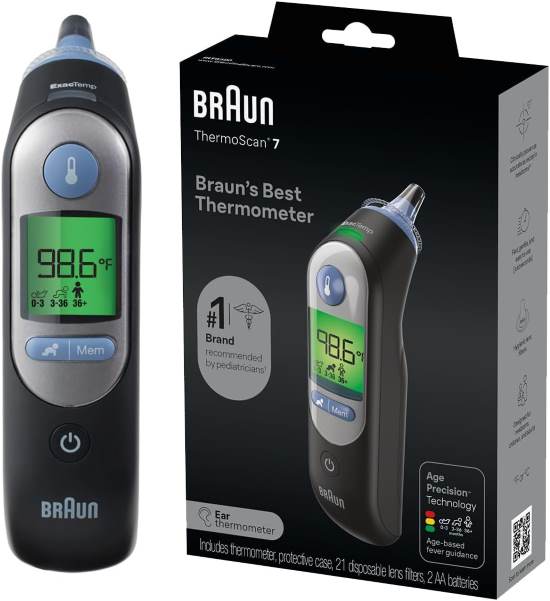
This thermometer stands out for its age based fever guidance. In real use, it helps interpret readings based on a child’s age, which reduces confusion for new parents.
Ear readings are fast and generally accurate when positioned correctly. It works best in calm situations where the child stays still briefly.
It suits parents who want guidance alongside measurements. It may not be ideal for very active infants who resist ear checks.
User Review
Melissa G., Columbia
“The age feature helped me understand what counts as a fever for my baby. It’s fast, but I need to hold my child steady.”
Key Features
- Age adjusted fever guidance: Adds context to readings for better decisions.
- Pre warmed tip: Improves comfort and accuracy.
- Fast ear measurement: Delivers results within seconds.
- ExacTemp positioning system: Confirms correct placement.
- Backlit display: Easy to read in low light.
- Memory recall: Tracks previous readings.
Pros and Cons
| Pros | Cons |
| Age specific guidance helpful | Requires steady positioning |
| Fast and accurate readings | Not ideal for movement |
| Comfortable ear tip | Limited to ear use |
Braun ThermoScan 5
Reliable ear thermometer for straightforward use
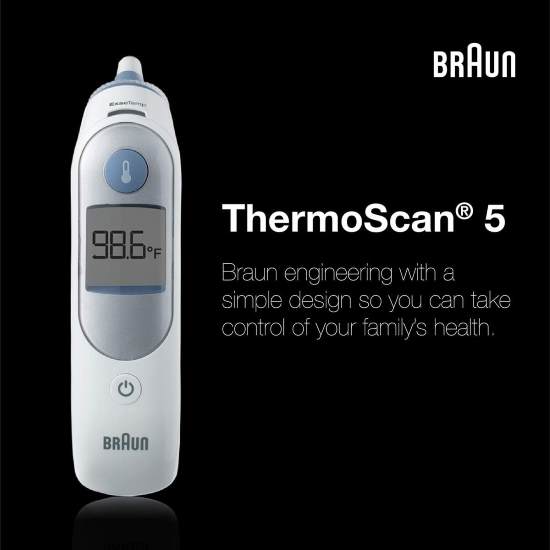
This version focuses on simplicity. It delivers consistent ear readings without added features. In practice, it works well for families who prefer a trusted, no frills option.
It handles repeated use well and provides stable readings. However, it lacks advanced guidance features found in newer models.
It suits experienced parents who already understand fever thresholds.
User Review
James P., Frederick
“I’ve used this for years. It’s simple and reliable, but I do wish it had more guidance for new parents.”
Key Features
- ExacTemp positioning indicator: Helps ensure correct placement.
- Quick measurement speed: Reduces discomfort for children.
- Durable design: Handles frequent use.
- Simple interface: Easy for anyone to operate.
- Compact build: Easy to store and carry.
- Consistent accuracy: Reliable across repeated use.
Pros and Cons
| Pros | Cons |
| Consistent performance | Lacks advanced features |
| Easy to use design | Ear only measurement |
| Durable for long use | No age guidance |
Frida Baby Rectal Thermometer
Dedicated rectal thermometer for infants
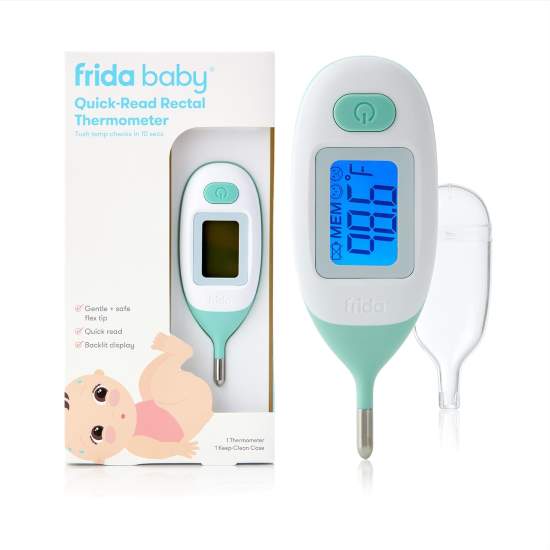
This thermometer focuses on accuracy for newborns. In real use, it delivers consistent readings quickly, which matters during early months.
The design includes a stopper for safety, reducing risk during use. Cleaning requires attention, but the waterproof build helps.
It suits parents of newborns who want precise readings. It may not be practical once the child grows older.
User Review
Rachel D., Bethesda
“This gave me peace of mind with my newborn. It’s not the easiest to use, but I trust the results completely.”
Key Features
- Rectal specific design: Maximizes accuracy for infants.
- Safety stopper feature: Prevents over insertion.
- Quick read technology: Reduces discomfort duration.
- Water resistant body: Simplifies cleaning.
- Memory tracking: Stores recent readings.
- Compact case included: Keeps it hygienic.
Pros and Cons
| Pros | Cons |
| Highly accurate for infants | Limited to one method |
| Built in safety stopper | Requires careful cleaning |
| Fast results for newborns | Not for older kids |
iHealth No Touch Forehead Thermometer
Clean and modern no contact thermometer
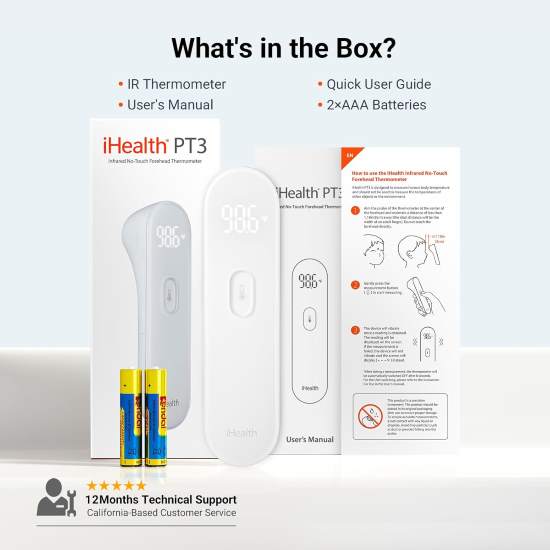
This thermometer emphasizes ease of use. It works well for quick scans without physical contact, which is helpful during illness outbreaks.
In practice, it delivers stable readings when used at the correct distance. The vibration feedback replaces sound alerts, making it discreet.
It suits families who prioritize hygiene and convenience. It may not match the precision of contact based thermometers.
User Review
Laura S., Towson
“I like how clean and quiet it is. I use it for quick checks, but I confirm with another thermometer if needed.”
Key Features
- Three sensor system: Improves reading consistency.
- Non contact operation: Reduces contamination risk.
- Silent vibration feedback: Ideal for nighttime use.
- Large LED display: Clear visibility in dark rooms.
- Simple one button control: Minimizes user error.
- Lightweight build: Easy to handle.
Pros and Cons
| Pros | Cons |
| Hygienic no contact design | Less precise than contact |
| Quiet operation mode | Needs correct positioning |
| Easy to use interface | Limited measurement types |
Buying Guide
What Actually Matters Before Choosing
Core performance factors
Accuracy remains the most critical factor. Many buyers assume all thermometers deliver similar readings, but measurement method changes results. Rectal thermometers provide the most reliable data for infants, while infrared models trade slight accuracy for speed and convenience. Long term satisfaction depends on choosing the right balance for your child’s age and behavior.
Material quality and durability
Thermometers face frequent handling and cleaning. Lower quality plastics degrade over time, affecting sensor stability. Many buyers overlook build quality, but it directly impacts consistency after months of use.
Comfort and usability
A thermometer that is difficult to position leads to unreliable readings. Parents often underestimate how much a child’s movement affects results. Ergonomic design and intuitive controls matter more than extra features.
Maintenance requirements
Some models require frequent cleaning or calibration. Buyers often ignore maintenance needs, but neglect reduces accuracy over time. Simple designs tend to last longer with less effort.
Environmental compatibility
Infrared thermometers react to room temperature changes. Maryland’s seasonal humidity and temperature shifts can influence readings. Understanding this helps avoid misinterpretation.
Safety considerations
For infants, safety features like flexible tips or stoppers prevent misuse. Buyers sometimes prioritize speed over safety, which can lead to discomfort or risk.
Related:
PandaEar Silicone Baby Bibs Review – Soft, Waterproof & Unisex (3-Pack)
Discover the HKAI Baby Bouncer: Your Ultimate Portable Infant Rocker for Soothing and Fun
Common Buyer Mistakes
Many buyers assume faster readings mean better performance. In reality, speed often reduces precision, especially in non contact models.
Some believe all digital thermometers provide identical accuracy. Different measurement methods produce different baselines, which leads to confusion.
Another mistake involves ignoring user technique. Poor positioning often causes inconsistent results, not device failure.
Buyers also overlook cleaning routines. Sensors accumulate residue, which gradually affects readings.
Some rely on a single thermometer type for all ages. Infants and toddlers require different approaches for reliable results.
Another common issue is using thermometers immediately after outdoor exposure, which skews infrared readings.
Finally, many expect silent operation without checking settings. Not all devices support true quiet mode.
How to Match Products to Specific Needs
Parents with newborns benefit from rectal thermometers for accuracy. These provide the most dependable baseline during early months.
Families with active toddlers often prefer no touch models. These allow quick checks without resistance, even if slight accuracy tradeoffs exist.
For frequent use across multiple family members, multi mode thermometers offer flexibility and long term value.
Parents who prioritize simplicity should choose basic digital models. These reduce user error and maintenance effort.
Those managing frequent illnesses may benefit from models with memory tracking and clear fever indicators.
Travel focused families should consider compact and durable designs that handle changing environments.
Conclusion
Choosing the right baby thermometer comes down to balancing accuracy, ease of use, and your child’s behavior. No single model fits every situation. Some excel in precision, while others prioritize convenience.
Understanding how each type performs in real conditions helps avoid frustration and unreliable readings. Focus on what matters for your daily routine rather than features you may never use.
A well chosen thermometer becomes a dependable tool, not just another device in the drawer.
FAQs
What type of thermometer is most accurate for babies
Rectal thermometers provide the most reliable readings for infants.
Are no touch thermometers reliable
They are convenient but slightly less precise than contact methods.
How often should I clean a baby thermometer
Clean it after every use to maintain accuracy and hygiene.
Can room temperature affect readings
Yes, especially with infrared thermometers.
Is ear or forehead better for toddlers
Forehead works better for active toddlers who resist ear checks.